
Category: Uncategorized
-
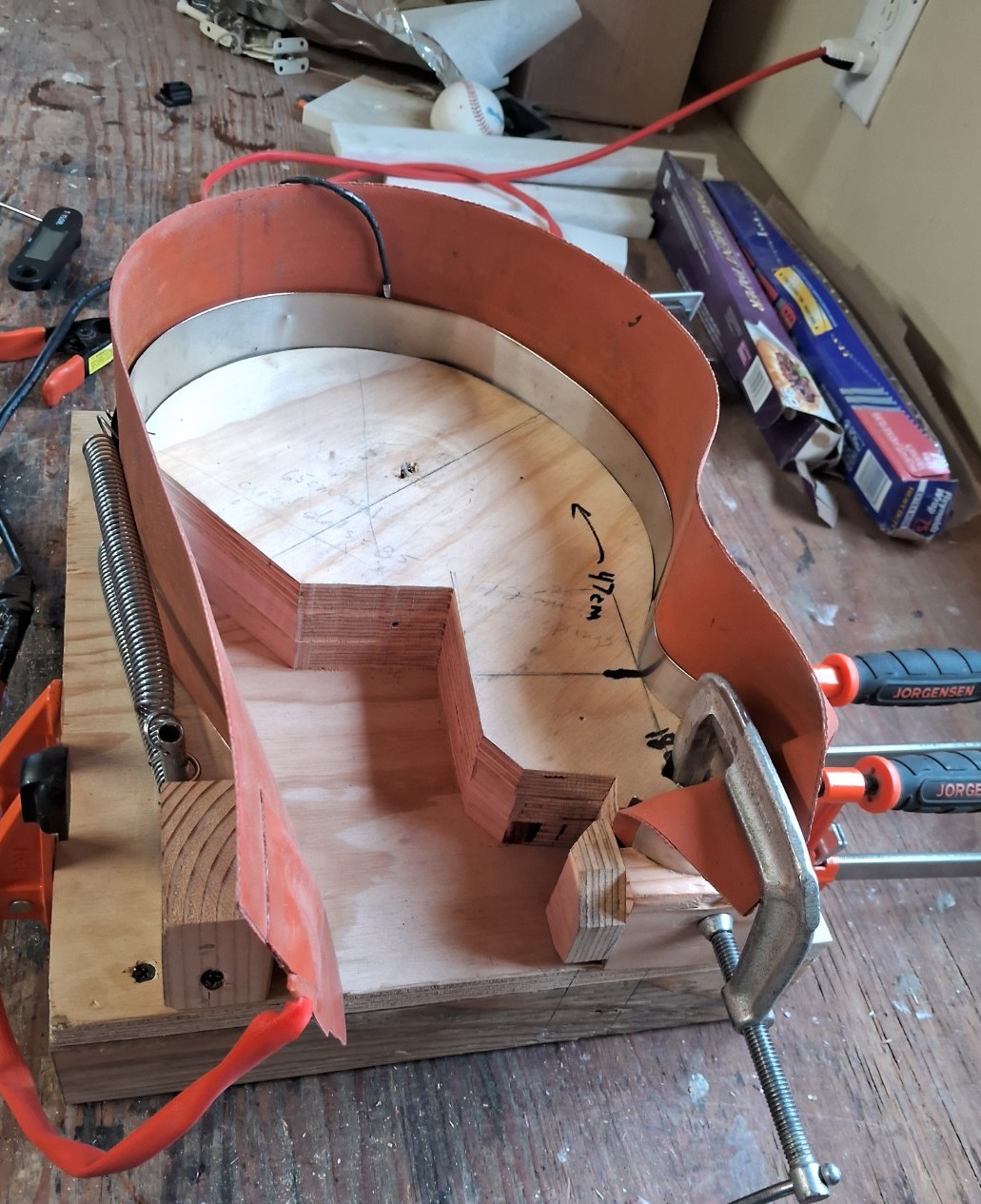
Mandolin Side Bending and Construction
This week I started bending and assembling sides as part of my mandolin build. In the past, I’ve bent each piece individually over a hot copper pipe. As I scale up my operation, I’m making tools and forms to work more accurately and efficiently. For side bending, this means building wooden bending forms for the…
-
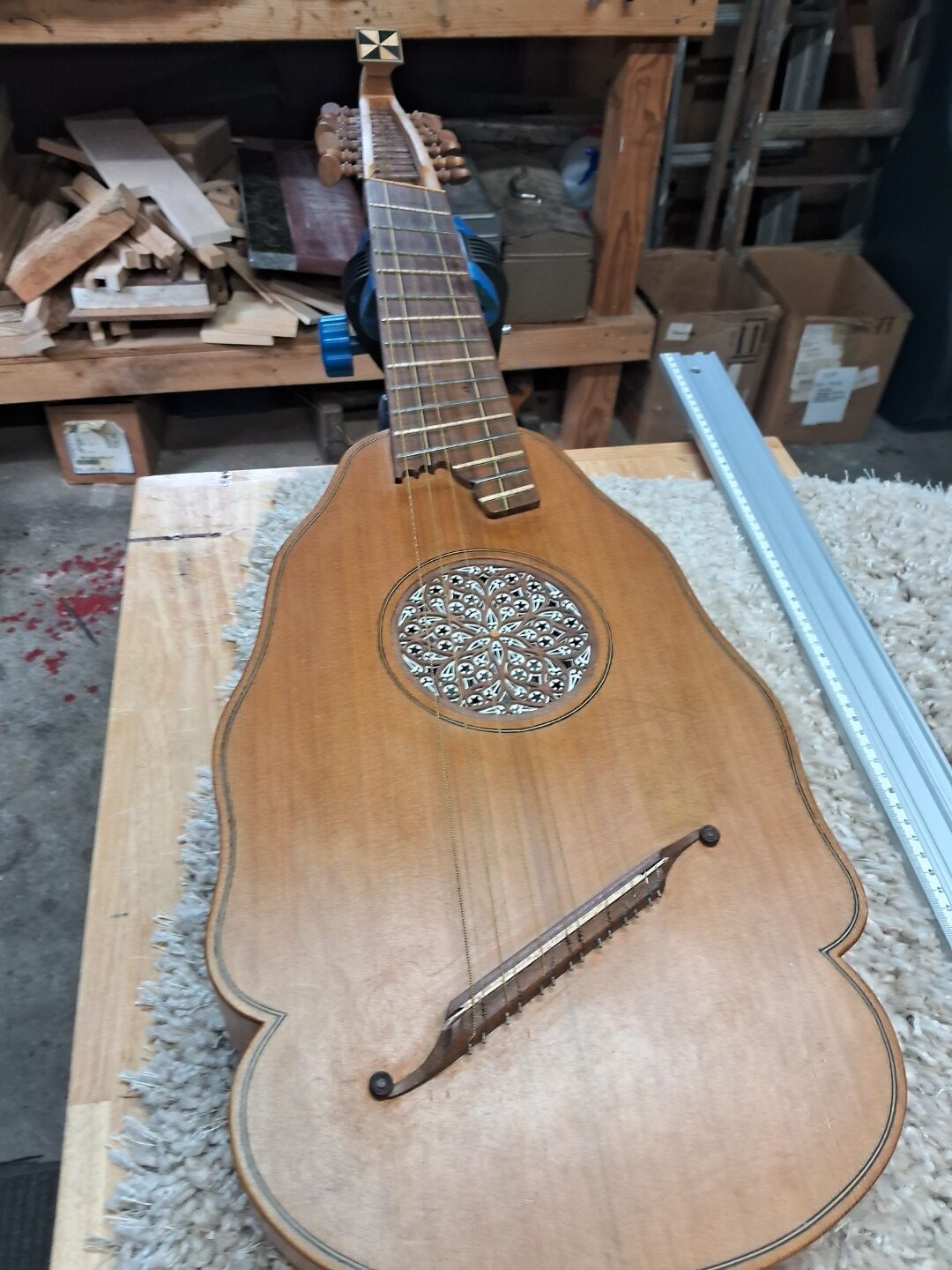
A Renaissance Repair
I sometimes receive unusual instruments needing repair, but recently I took on my first Renaissance instrument repair. A local musician brought me his Orpharion, in need of a neck reset, back repair, and bridge work. The orpharion was developed in the 16th century for women whose voluminous dresses made it difficult for them to grasp…
-
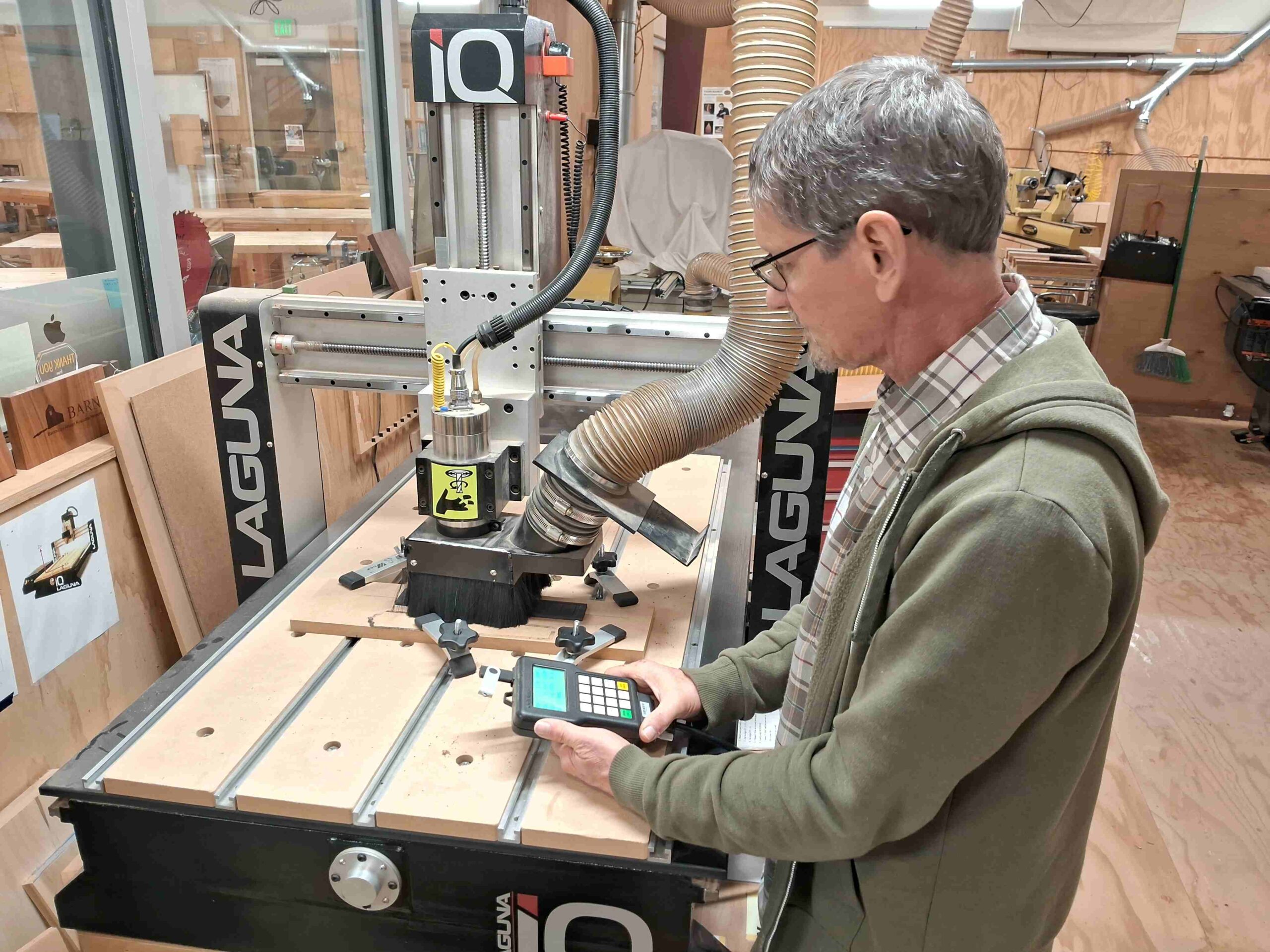
The World of CNC
Computer Numerical Control (CNC), a process which uses a computer to operate tools like mills and routers, has taken hold in the instrument building world over the past 20 years. Even small shops now use CNC to mill out complex parts like bridges, fingerboards, and necks. Just a year ago, I told myself I was…
-
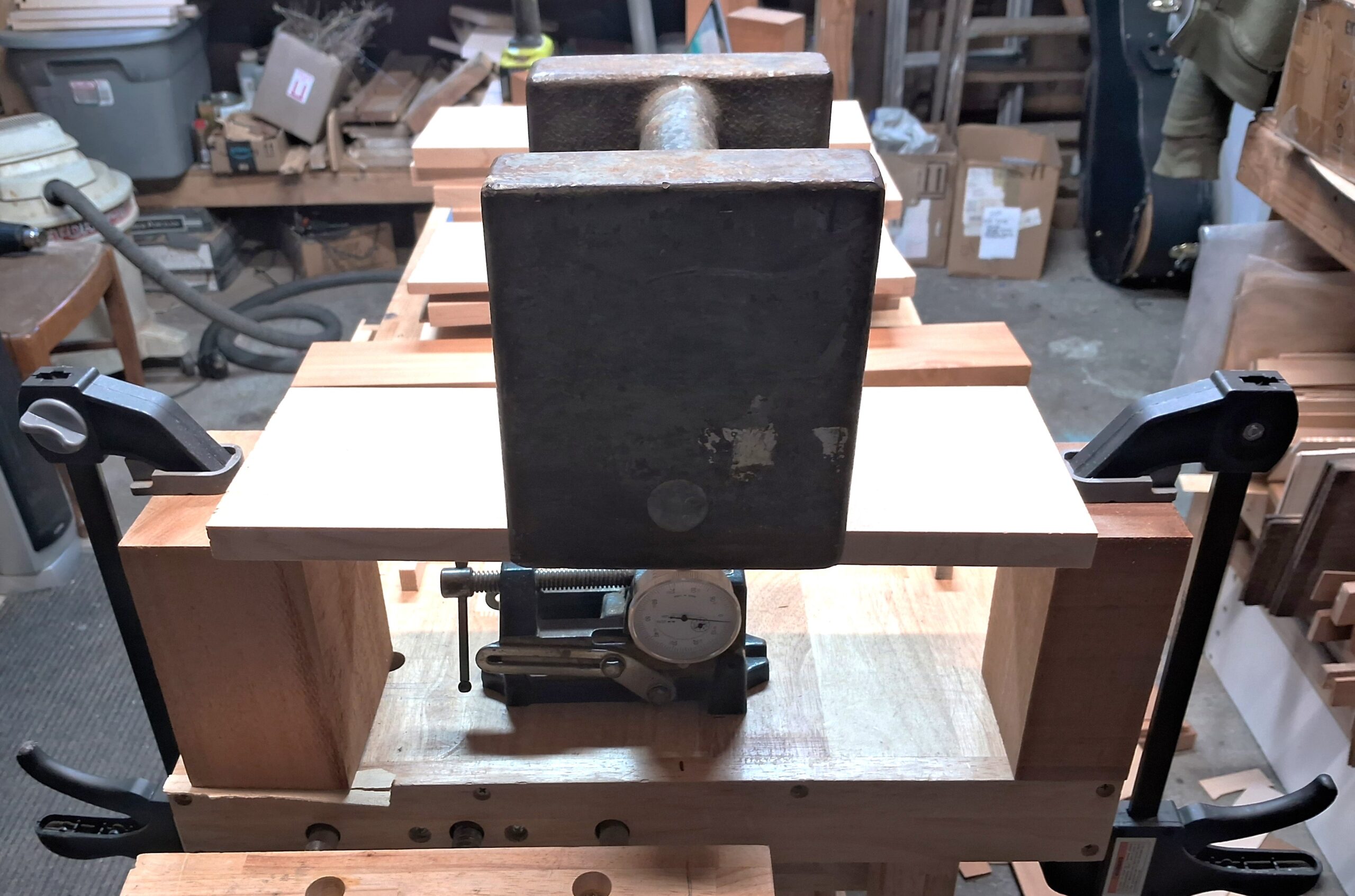
Testing Mandolin Topwood
Luthiers for centuries have agreed that the wood on the top of an instrument affects its tone far more than any other part of the instrument. Spruce is the most widely used top wood for mandolins, and for my current build, I have three different spruce species: Lutz, Englemann (left side of the picture), and…
-

100+ Year-Old Mandolin Restoration
This Oscar Schmidt mandolin, built in the late 19th or early 20th century, came to me several months ago in virtually unplayable condition. Years of string tension had pulled the neck forward to the point where the strings were too high off the fretboard, and a well-intentioned owner coated the original French polish with “modern”…
-
Combining Tradition and Modern Technology
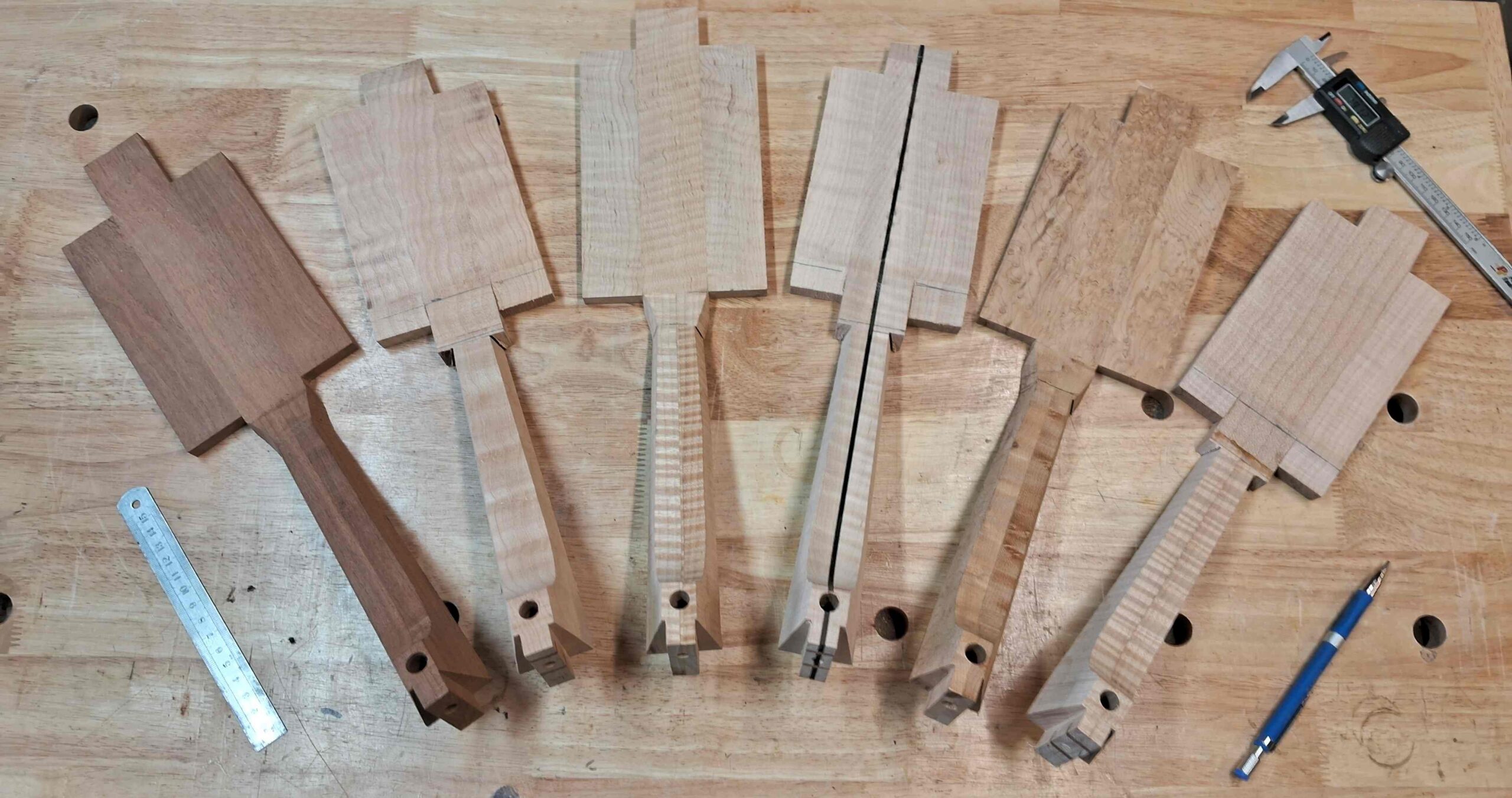
I’ve completed the first significant step in my 2025 mandolin build! Rough construction of a mandolin neck involves 12 distinct steps including cutting and squaring the main shaft, shaping the tenon which will fasten the neck to the body of the instrument at a precise 5 degree angle, building out the head at 14 degrees…
-
2025 Mandolin build!
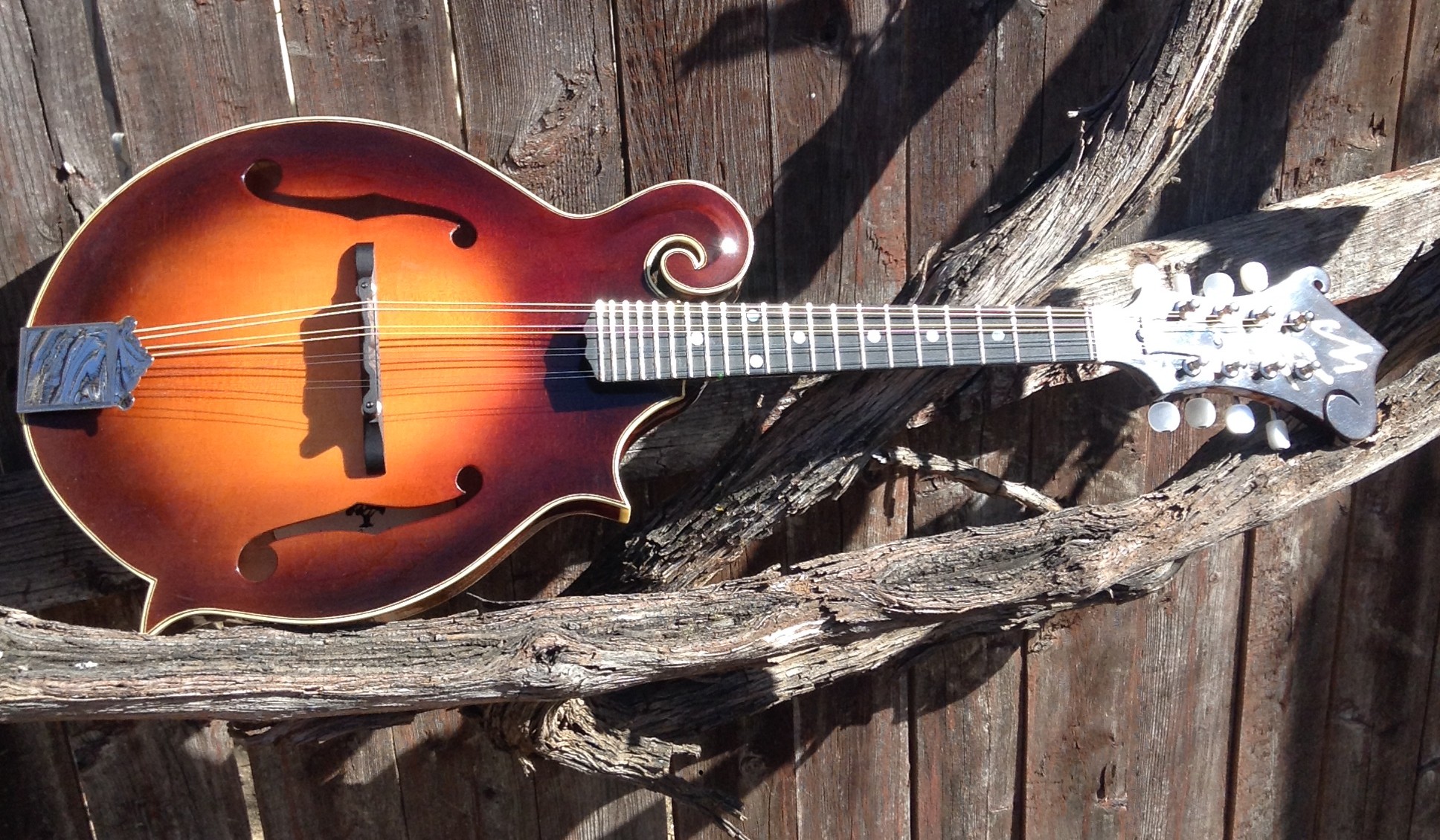
This month, I started building a batch of archtop mandolins to be completed by winter, 2025. They’ll feature Loar-inspired arching and graduations for that punchy tone that cuts through in a jam session (see video clips of my instruments below). I prefer to build 5-6 instruments as a batch, but to customize the design of…
-
Guitar Bracing Experiment: Final Conclusions!
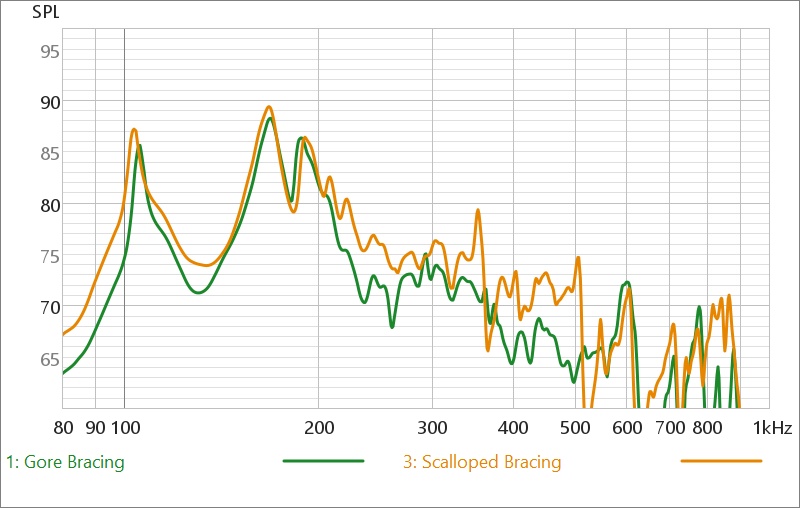
My experiment with two guitar bracing systems has come to an interesting conclusion. Both guitars have great volume and projection, and a strong bass tone. The Martin-style scalloped X-bracing (1st video: sorry for the cell phone quality audio!) seems to have produced a relatively stronger treble response (more “sparkle” according to one player), while the…
-
A Water Uke
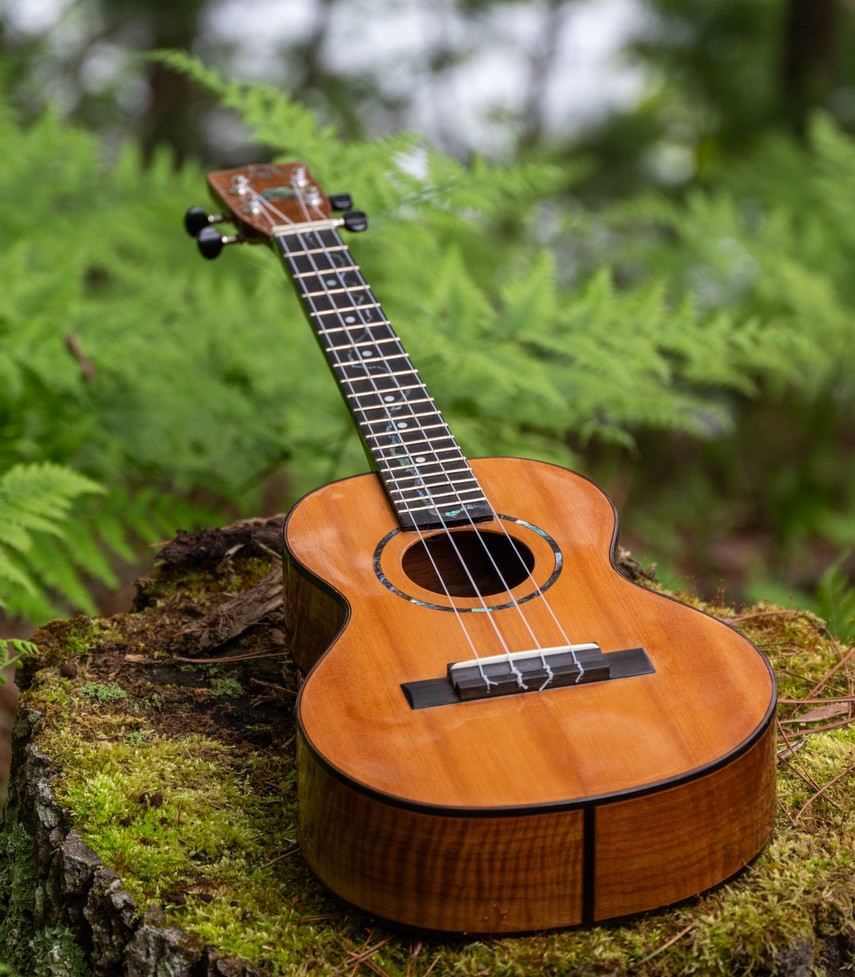
This tenor ukulele is instrument #3 in a series I’ve made from Mninga (Pterocarpus angolensis) reclaimed from old furniture in Tanzania. The customer, a for a water walker in Minnesota. She said she wanted a water theme, so after some conversation we agreed that I would inlay the course of the St. Croix river in…
-
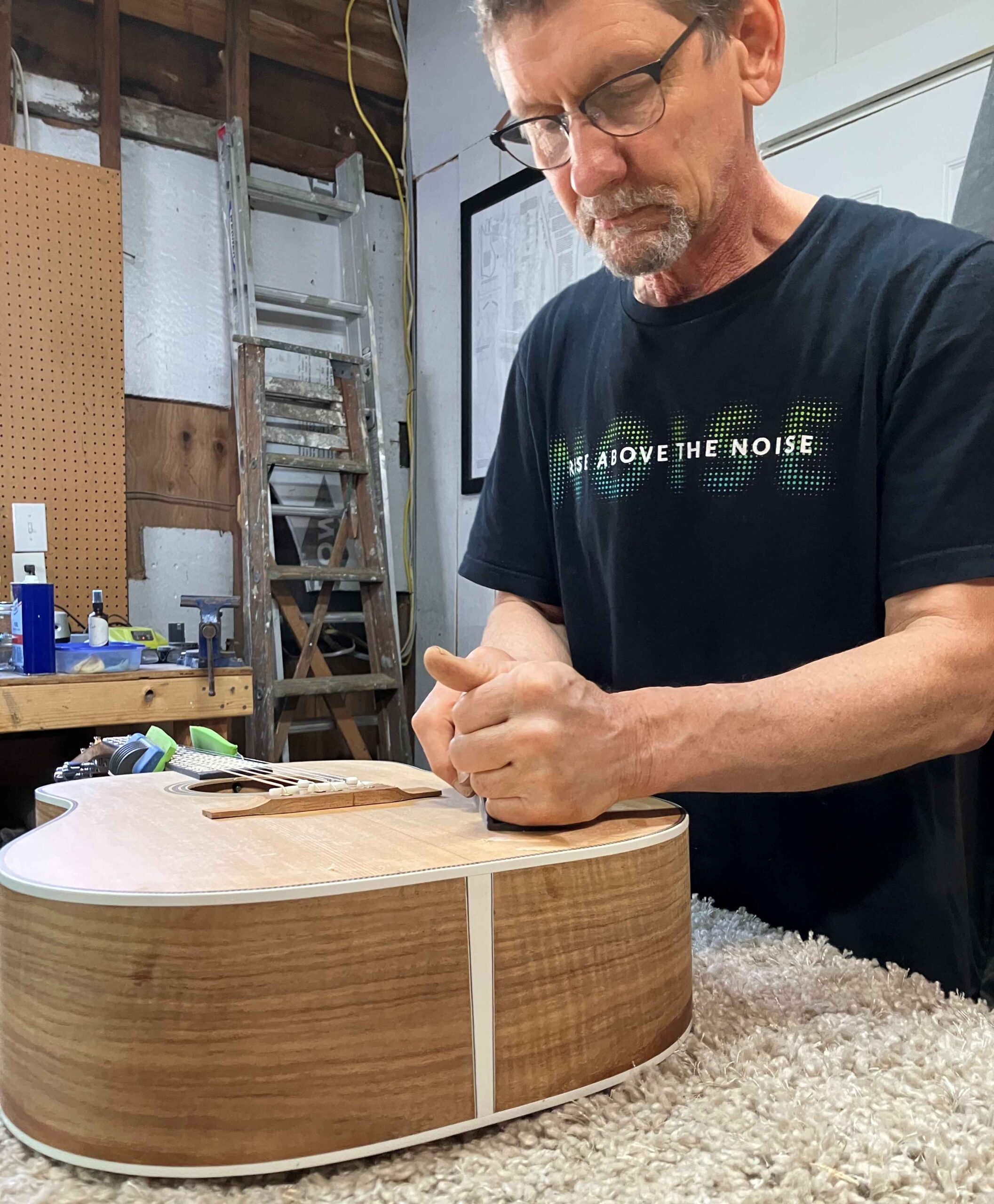
They have a voice!
I’ve been building two guitars with similar design, but different bracing. Once an instrument is structurally complete (but not varnished) I like to string them up to get an initial idea of their tone. First impressions: Despite their different bracing strategies, they’re both VERY loud and they sound remarkably similar. Their fundamental frequencies rose considerably…