
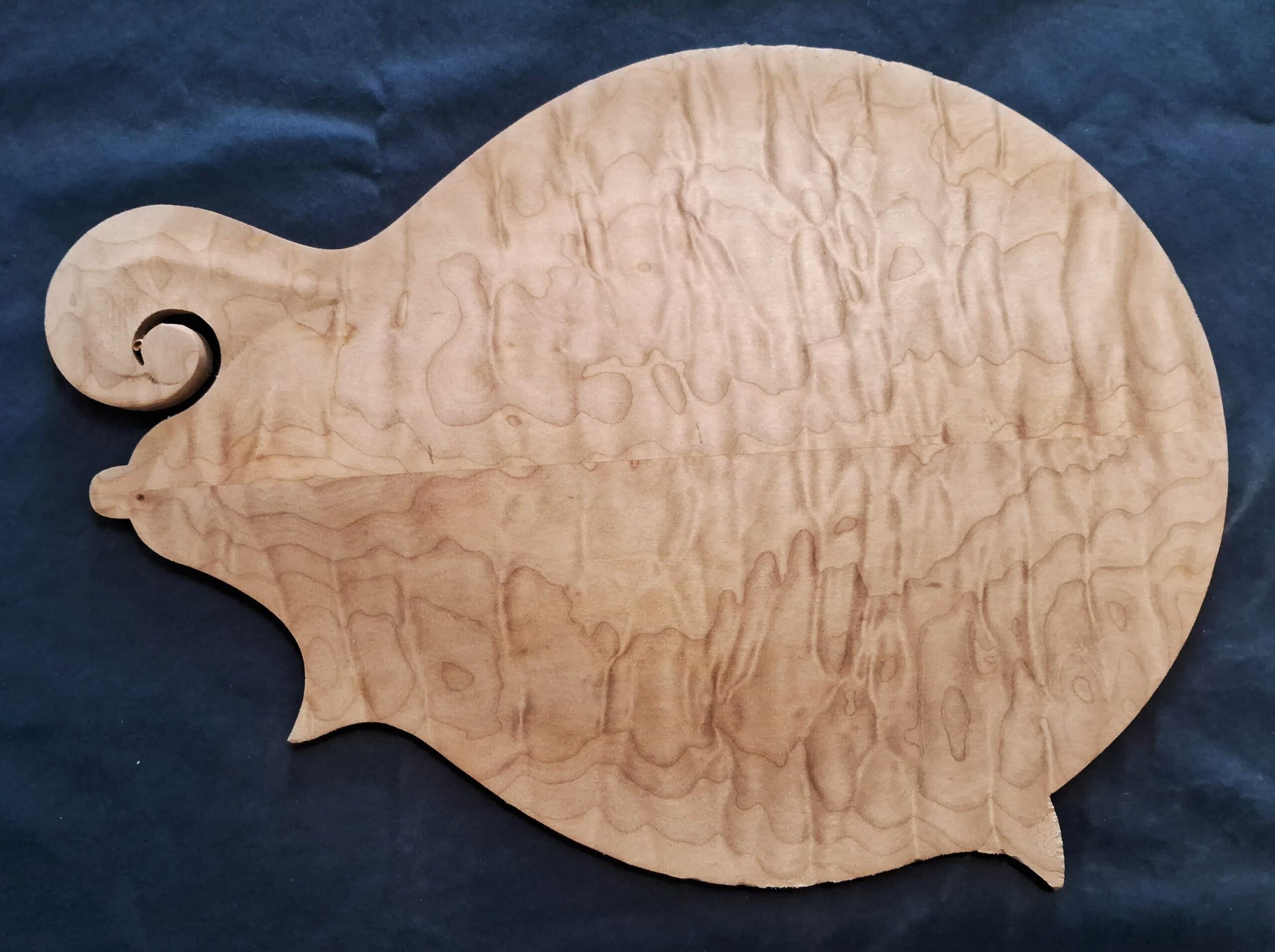
In my current mandolin build, I’m using 4 different species of “figured” maple. Each one has its own character, but all are so beautiful, they’re a thrill to work with!

This European maple (Acer platanoides) shows a classic “fiddleback” pattern.

Red maple (Acer rubrum) often has similar curly figure, but in diverging lines.

Sugar maple (Acer saccharum) can show curly figure, but also produces birdseye, the hardest maple around.

Bigleaf maple (Acer macrophyllum) which grows near me here in the Pacific northwest has much softer wood, and in addition to curly grain, it produces quilted figure.
Figuring in wood appears when the grain of a tree, instead of growing parallel up and down the tree, grows in waves and swirls. When a saw cuts through this irregular grain, light is refracted in different directions, causing the surface of the wood to shimmer and shift like a hologram. It doesn’t substantially change the tone of the wood, but under finish it can look breathtaking!
Less than 1% of maple trees produce figured wood, and though it brings a premium price, no one has worked out how to grow them commercially. In fact, no one even knows for sure why certain trees are figured. Theories include stress, genetics and a combination of the two, but despite lots of research, nothing has been proven.
In the meantime, I’ll just enjoy the thrill of working with this beautiful, mysterious wood.