
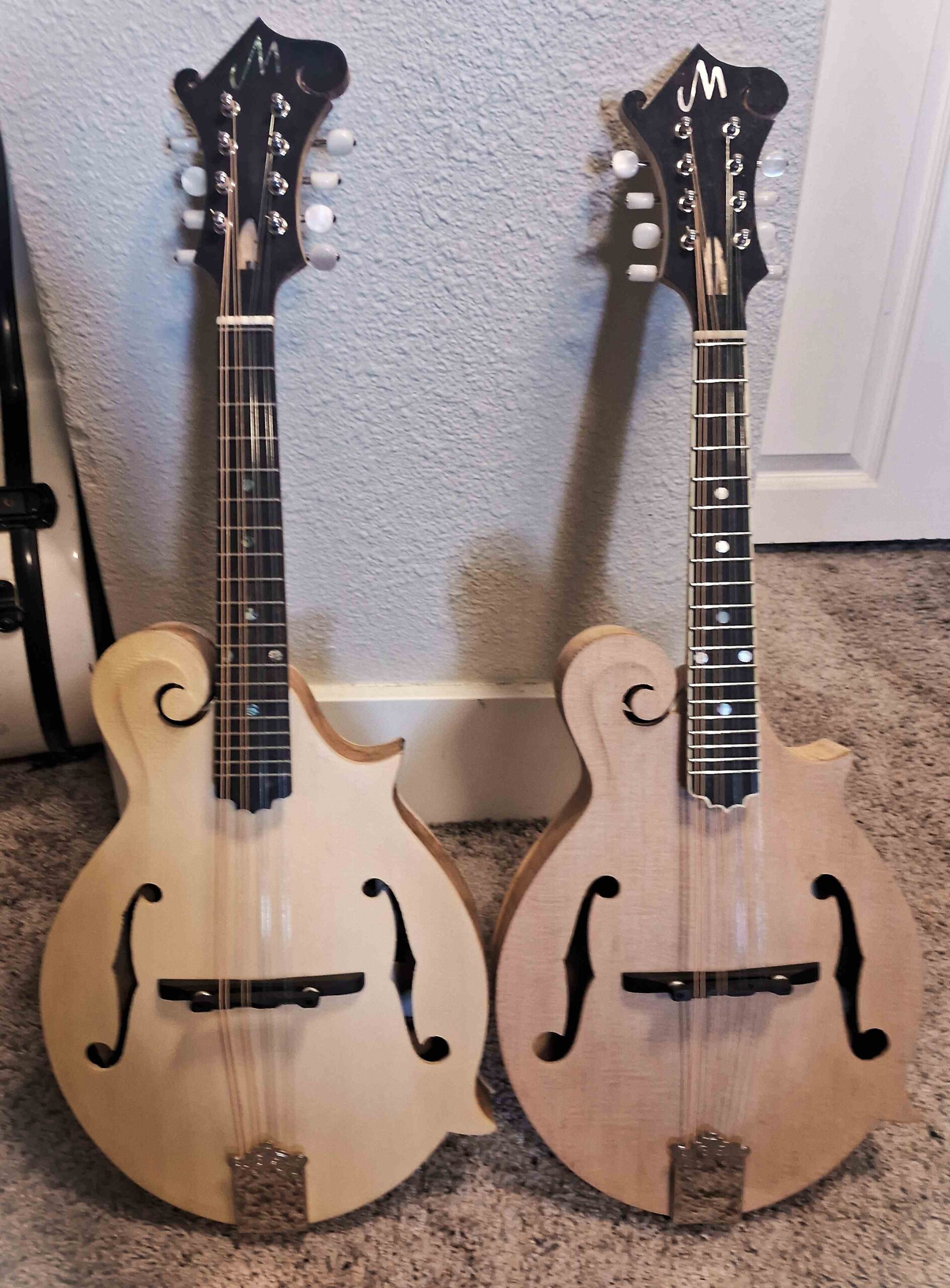
This week I strung up the first two mandolins of my current batch “in the white” (with no binding or finish). I’m using a new source of Sitka and Englemann spruce for the tops, and I want to be sure everything is dialed in before proceeding with the 6 instruments that already have owners. Both instruments have maple backs, sides and necks. My first impression is that both instruments are nice and loud, bass is thin (predictable for a new instrument), but the Englemann top has a notably sweeter treble tone.

I still get excited hearing the first notes of a new instrument. As the wood experiences its first pulses from the vibrating strings, it begins to flex and vibrate in ways it never has before. At first, an instrument typically sounds a bit thin and harsh, but as it is played, it begins to change, becoming more supple in the nodes where the top and back flex to create sound. This “opening up” process is most striking during the first week of an instrument’s life, though it continues for years after, which is why older instruments are often described as possessing a mellower or woodier tone.

I will also direct the tone of these instruments by thinning the top and back, carving the tone bars, enlarging the sound holes, changing the neck angle, etc. Most of the thinning already took place before the top and back were glued to the sides. At that point, I had already removed 60-70% of the wood, leaving a thin arched plate. Any further fine tuning will be small (0.1-0.2 mm) rather than major carving, but it will define the potential voice of the instrument.

I generally wait a week or more for the instrument to “open up” before making such changes. In the meantime, I fit it with a ToneRite vibrator to keep reminding it that it’s aspiring to become a sound generator! I also play it as much as I can since that’s the most effective way to help the wood find its new calling as a musical instrument!