
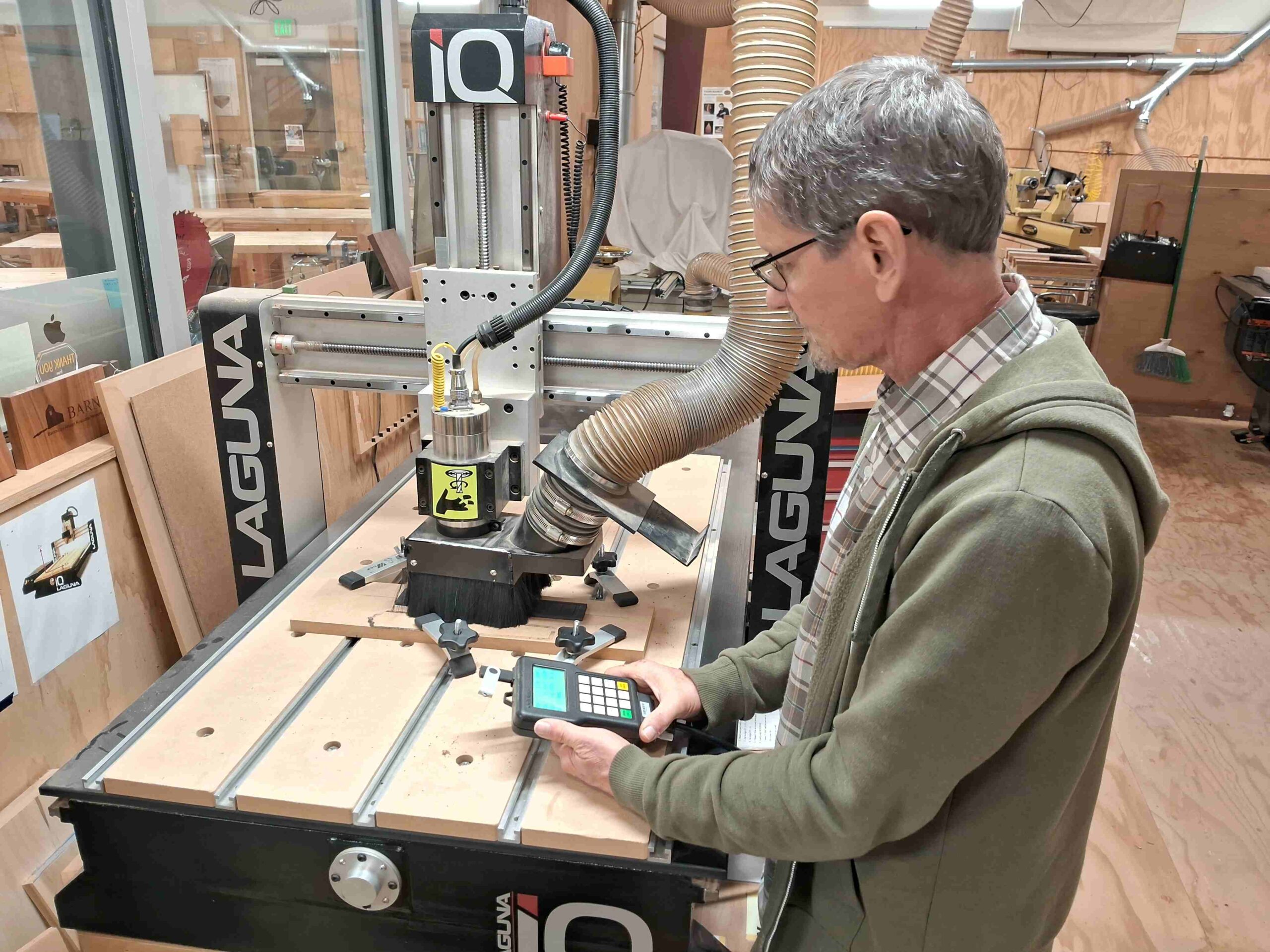
Computer Numerical Control (CNC), a process which uses a computer to operate tools like mills and routers, has taken hold in the instrument building world over the past 20 years. Even small shops now use CNC to mill out complex parts like bridges, fingerboards, and necks. Just a year ago, I told myself I was too late in my career to invest the time and money to get started in CNC. Then without trying, it fell in my lap!

First, Kris Young, of Yzzy Guitar Works in Seattle offered to digitize my mandolin arching and graduation templates and rough-carve plates. Then Doug Salot, my assistant for the guitar-building class at Bainbridge Artisan Resource Network (BARN) offered to digitize and show me how to use the BARN CNC to mill fingerboards and other parts. There was still a significant learning curve, and Kris and Doug have been incredibly generous with their time and knowledge. But this week I milled and slotted my first mandolin fingerboards!

I can actually slot a fingerboard faster by hand than with the CNC, but the accuracy and consistency of the equipment is phenomenal. The compound-radius on my fingerboards will now be spot-on every time. My mandolin top and back plates will be more consistent. I will still hand carve them to achieve their final thickness and voicing, but my 66-year old hands won’t ache every evening from carving hard maple by hand!

I won’t forget how to use a hand gouge and thumb plane. I’ll still continue to use conventional power tools (band saws, routers, etc.) for many of my operations, but having stepped into the world of CNC opens up a whole new world of possibilities.
